1
/
of
6
The Frugal Fixer
2013-2020 Infiniti JX35 QX60 EHPS Power Steering Pump O-Ring Repair Kit !
2013-2020 Infiniti JX35 QX60 EHPS Power Steering Pump O-Ring Repair Kit !
Regular price
$14.99 USD
Regular price
Sale price
$14.99 USD
Quantity
Couldn't load pickup availability
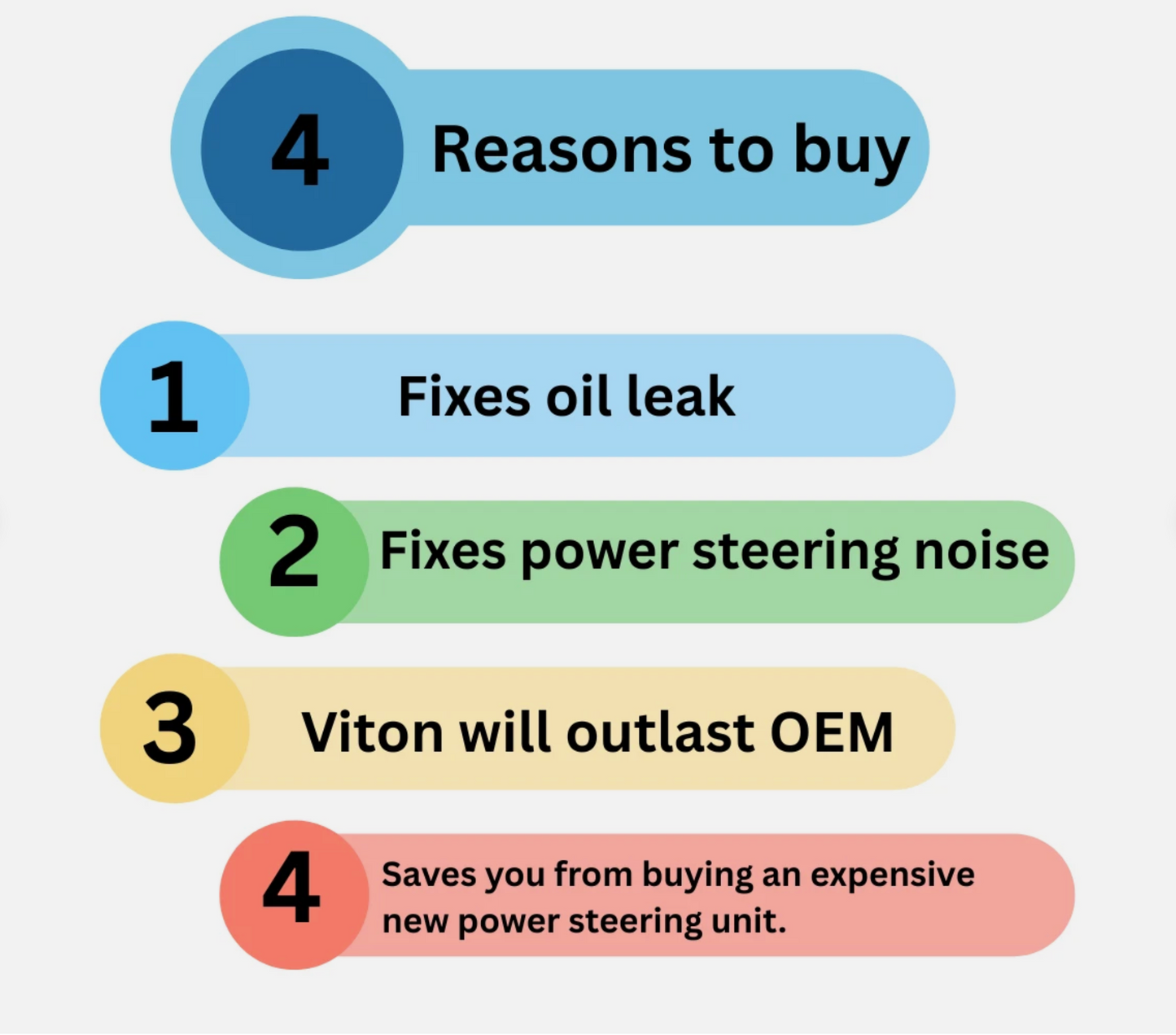
Easy Repair that will save you the money of having to buy a new pump. Fix its before you run it without fluid.
Crafted with 3M Viton, the sole material engineered to withstand high temperatures and the demanding CHF11S power steering fluid. Unlike the nitrile material used in the original equipment, which is susceptible to failure, this offers superior durability.
This will come with 2 O-rings needed to complete the repair.
Works for 2014-2020 Infinity QX60
Works for 2012-2013 Infinity JX35
Tools and Materials Needed
- O-Ring Repair Kit: Specific for 2013-2020 Infiniti JX35/QX60 or Nissan Pathfinder EHPS pump (Our Viton O-rings are designed for CHF11S fluid).
- Wrenches and sockets: For removing bolts and components (typically metric sizes, e.g., 10mm, 12mm).
- Screwdrivers: Flathead and Phillips for clips or covers.
- Torque wrench: For precise bolt tightening.
- Pliers: For hose clamps.
- Power steering fluid: CHF11S (do not use standard power steering fluid, as it may damage the system).
- Clean rags and degreaser: For cleaning components.
Step-by-Step Repair Guide
- Safety First
- Park the vehicle on a flat surface, engage the parking brake, and disconnect the negative battery terminal to prevent electrical issues.
- Allow the vehicle to cool down to avoid burns from hot components.
- Wear gloves and safety glasses to protect against fluid and debris.
- Locate the EHPS Pump
- The electro-hydraulic power steering pump is typically located near the front of the engine bay, below the reservoir, and connected to the steering rack via hoses.
- Refer to your vehicle’s service manual for the exact location (JX35: 2013; QX60: 2014-2020, 3.5L V6 or hybrid models).
- Prepare the Work Area
- Place a drain pan under the pump to catch any leaking power steering fluid.
- Clean the pump and surrounding area with degreaser and rags to prevent contamination during disassembly.
- Drain the Power Steering Fluid
- Locate the power steering fluid reservoir (usually near the pump).
- Disconnect the return hose from the reservoir (use pliers to release the clamp) and let the fluid drain into the pan.
- Turn the steering wheel lock-to-lock a few times (with the engine off) to expel residual fluid from the system.
- Note: Avoid reusing old fluid, as it may be contaminated.
- Remove the EHPS Pump
- Disconnect any electrical connectors attached to the pump (e.g., for the electric motor). Label them for reassembly.
- Loosen and remove the high-pressure and return hoses connected to the pump. Be prepared for minor fluid spillage.
- Remove the mounting bolts securing the pump to its bracket. Note the bolt locations and sizes, as they may differ.
- Carefully remove the pump. The mounting bracket may not be included in some replacement kits, so check if you need to retain it.
- Disassemble the Pump to Access the O-Ring
- Inspect the pump for the O-ring location, typically where the pump mates with the reservoir or hose connections.
- Carefully disassemble the pump housing or connection points as needed. Refer to the repair kit instructions or a service manual for guidance, as EHPS pumps have both hydraulic and electrical components.
- Note: Some kits specify O-rings for the inlet/outlet or reservoir connections. Avoid damaging seals or electrical components during disassembly.
- Replace the O-Ring
- Remove the old O-ring(s) using a small flathead screwdriver or pick. Be gentle to avoid scratching the sealing surfaces.
- Clean the O-ring groove and mating surfaces thoroughly with degreaser to remove old fluid or debris.
- Install the new O-ring from the repair kit, ensuring it’s the correct size and material (e.g., 3M Viton for compatibility with CHF11S fluid). Lubricate the O-ring lightly with silicone past to ease installation and ensure a good seal.
- Verify the O-ring seats properly without twisting or pinching.
- Reassemble the Pump
- Reattach any disassembled pump components, ensuring all seals are properly aligned.
- Reinstall the pump onto its mounting bracket and tighten bolts to the manufacturer’s torque specs (consult a service manual).
- Reconnect the high-pressure and return hoses, ensuring clamps are secure.
- Reattach electrical connectors.
- Refill the Power Steering System
- Fill the reservoir with CHF11S power steering fluid to the recommended level.
- Turn the steering wheel lock-to-lock several times (engine off) to circulate fluid and bleed air from the system.
- Check for leaks at the pump and hose connections. Top off fluid as needed.
- Test the System
- Reconnect the battery and start the engine.
- Turn the steering wheel slowly in both directions to check for smooth operation, unusual noises (e.g., whining or screeching), or leaks.
- If the steering feels heavy or a warning light appears, recheck fluid levels and bleed the system again. Persistent issues may indicate a faulty pump or incorrect O-ring installation.
- Final Checks
- Inspect all connections for leaks after a short test drive.
- Ensure the reservoir fluid level remains stable.
- Clean up any spilled fluid and dispose of old fluid properly.
Tips and Warnings
- Use the Correct Fluid: The JX35/QX60 EHPS system requires CHF11S fluid. Using standard power steering fluid can damage the pump and seals, leading to leaks or failure.
- Verify Compatibility: Ensure the O-ring kit matches your vehicle (2013 JX35 or 2014-2020 QX60, 3.5L V6 or hybrid). Kits for Nissan Pathfinder (2013-2020) may also be compatible.
- Cost Consideration: Replacing the O-ring is significantly cheaper than a full pump replacement, which can cost $1,780-$4,504.
Troubleshooting
- If Leaks Persist: Double-check O-ring installation, surface cleanliness, and fluid type. Inspect hoses and connections for cracks or loose fittings.
- Heavy Steering: Low fluid levels or air in the system can cause this. Bleed the system thoroughly. If the issue persists, the pump itself may be failing.
- Noise: Whining or screeching may indicate air in the system, low fluid, or pump damage. Address these before driving extensively.
Fits these pumps:
49110-3KE5C, 49110-3KE5D , 491103KE5E , 49110-3KE5A
Share